
What Should Buyers Check When Sourcing Concrete Shuttering Plywood?
Published on — Blog
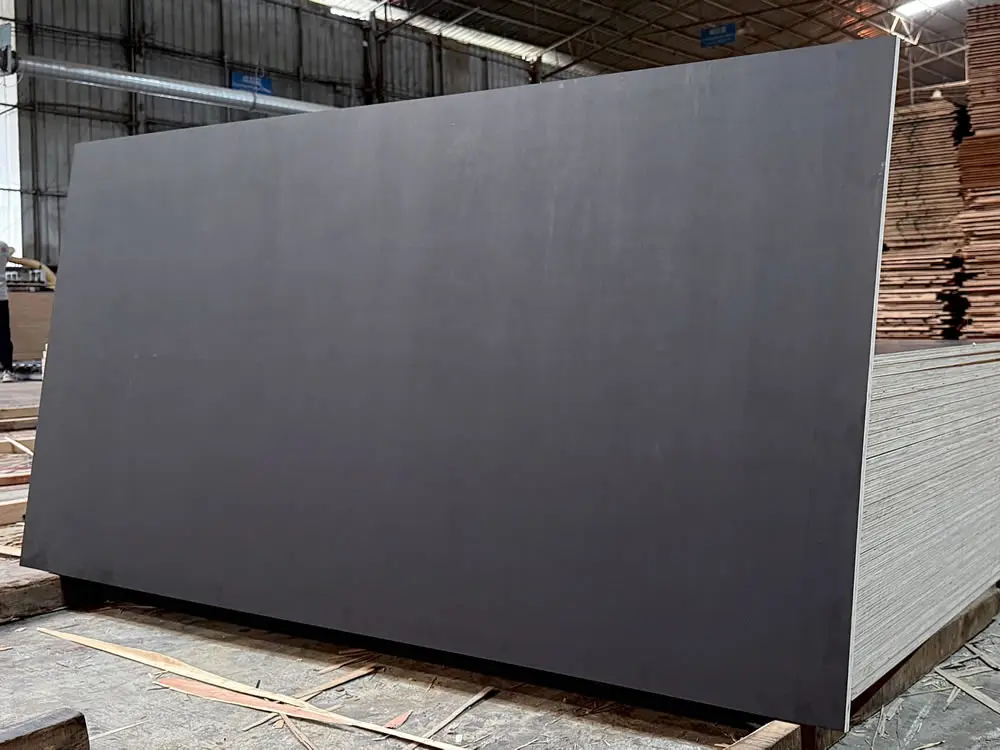
When buyers contact us for concrete shuttering plywood, price is usually one of the first questions.
But a price per sheet does not tell the whole story.
Two quotations may show the same size and thickness, while the actual plywood can be different in core material, glue, film, surface finish and other production requirements.
This is why, when we receive an inquiry, we prefer to understand the product specification first. Once the specification is clear, the price comparison becomes much more meaningful.
1. What Size Do You Need?
Size is one of the first things to check when sourcing film faced plywood for concrete formwork.
For export orders, 1220 × 2440mm is one of the sizes we are frequently asked about. Other sizes are also used depending on the destination market and application.
For example, buyers supplying different markets may already have their own regular dimensions.
If you are replacing an existing supplier, using your current specification as the starting point usually makes comparison much easier.
2. What Thickness Are You Actually Buying?
Common inquiries include 12mm, 15mm, 18mm and 20mm, but the required thickness varies by market and application.
One point buyers should pay attention to is that the nominal thickness shown on a quotation does not always tell you everything about the finished panel.
If several suppliers are quoting an 18mm panel, make sure you are comparing equivalent specifications rather than assuming every “18mm film faced plywood” is the same product.
3. Glossy or Matte?
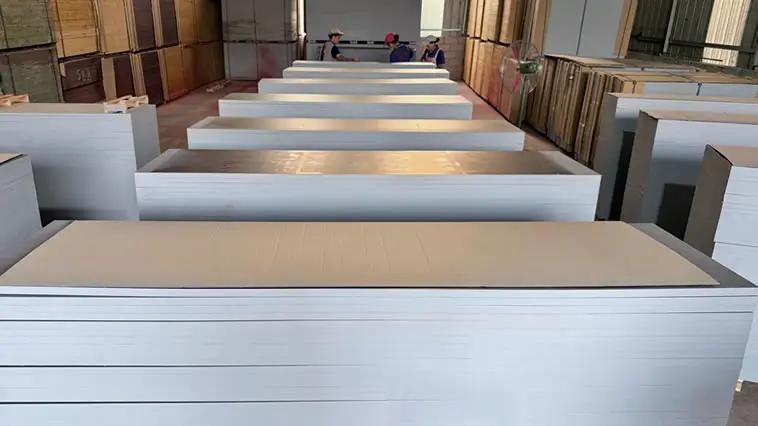
Both glossy and matte film faced plywood are used for concrete formwork, and the right choice depends on the project and local market preference.
Glossy plywood has a smoother, more reflective surface and may be considered when the appearance of the concrete surface after formwork removal is important.
Matte plywood has a lower-reflection finish and is also widely accepted for general formwork applications.
There is also a production difference.
In our production, matte film faced plywood requires a two-stage production process and additional sanding to achieve a flat and consistent matte surface. This involves more processing, so a comparable matte specification will normally cost more than glossy.
Neither surface should automatically be treated as a higher quality grade. The right choice depends on what the buyer actually needs.
4. What Core Material Is Used?
Core material is another important part of the specification.
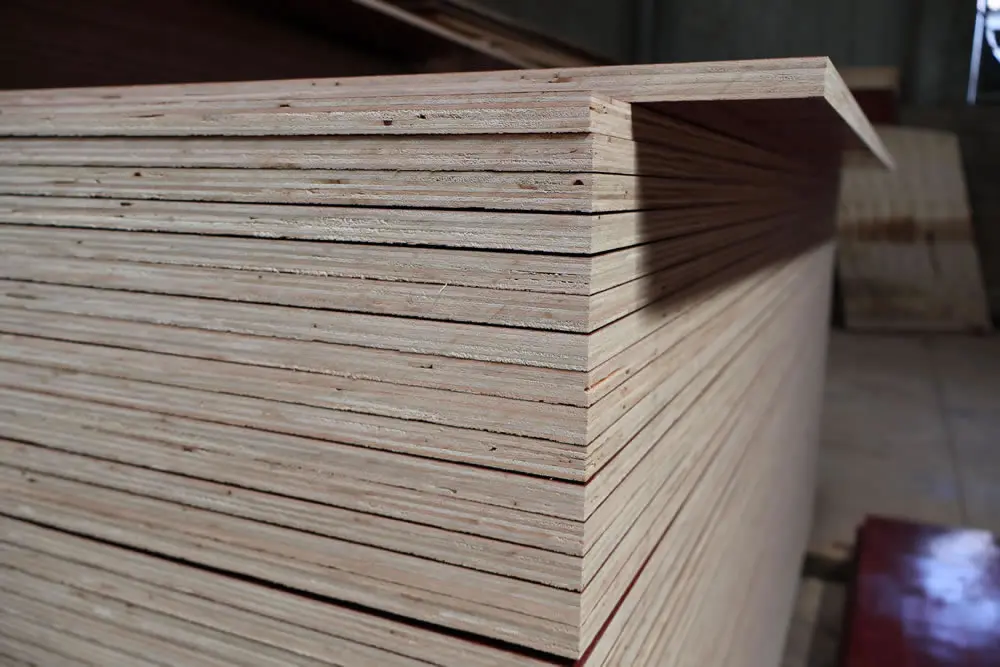
At our factory in Guangxi, eucalyptus is one of the main raw materials we use for plywood production.
The core affects the density, strength, weight and overall performance of the finished panel, so buyers should check what is actually inside the plywood rather than comparing only the surface film.
Even when two products look similar from the outside, their internal construction may be different.
5. What Glue Is Used?
Glue is especially important when the plywood will be exposed to moisture and repeated concrete formwork use.
Different orders may require different bonding specifications depending on the application and target market.
For this reason, we do not recommend comparing two quotations simply because both products are called “film faced plywood.”
The core, glue, film and production requirements should be considered together.
6. How Many Sheets Can Be Loaded in a Container?
This is one of the most common questions we receive from importers.
There is no single loading quantity for every film faced plywood order.
The number of sheets depends on several factors, including:
▪panel size
▪thickness
▪panel weight and density
▪packaging
▪container weight limitations
For example, a denser panel may mean fewer sheets can be loaded even when the dimensions are the same.
That is why we calculate the loading quantity after confirming the actual specification instead of using one fixed number for every order.
7. What Documents Are Available?
For international orders, buyers may also need to review product and company documents before moving forward.
The exact requirements depend on the destination market and the product being purchased.
Depending on the order, buyers may ask about product specifications, test reports, FSC, CE, JAS or other relevant documents.
We normally confirm the destination market and product requirements first, then provide the available documents for the buyer to review.
Not every market requires the same documentation, so this should be checked according to the actual order rather than treated as one fixed requirement for all buyers.
8. What About Lead Time and Trade Terms?
Once the product specification is confirmed, the next questions are usually about delivery.
Buyers commonly ask about production lead time, container arrangement, destination port and trade terms such as FOB, CFR or CIF.
These details should be discussed together with the product specification because they affect the final quotation and purchasing plan.
For repeat orders, stable supply and specification consistency are also important. A low first quotation is less useful if the same specification cannot be supplied consistently in later shipments.
Why We Don't Recommend Comparing Only the Price Per Sheet
For an importer or distributor, the cheapest price on a quotation is not necessarily the lowest actual purchasing cost.
Suppose two suppliers both quote:
1220 × 2440 × 18mm film faced plywood
The description looks the same.
But one product may differ from the other in core material, glue, actual thickness, film, surface finish, density or production process.
In that situation, comparing only the price per sheet does not give the buyer a clear picture.
This is why we prefer to make the specification clear first.
Once both sides know exactly what product is being discussed, it becomes much easier to compare price, loading quantity, delivery and repeat supply.
Conclusion
When sourcing concrete shuttering plywood, price is important, but it should not be the only point you compare.
Size, thickness, surface finish, core, glue, loading quantity, documentation and delivery conditions all affect what you are actually buying.
From our experience as a plywood manufacturer and exporter, the most useful comparison starts with one simple question:
Are the suppliers actually quoting the same plywood specification?
Once the answer is clear, comparing price and supply terms becomes much easier.
For immediate plywood inquiries, please contact us.