
Phenolic vs. Melamine Glue for Film Faced Plywood
Published on — Blog
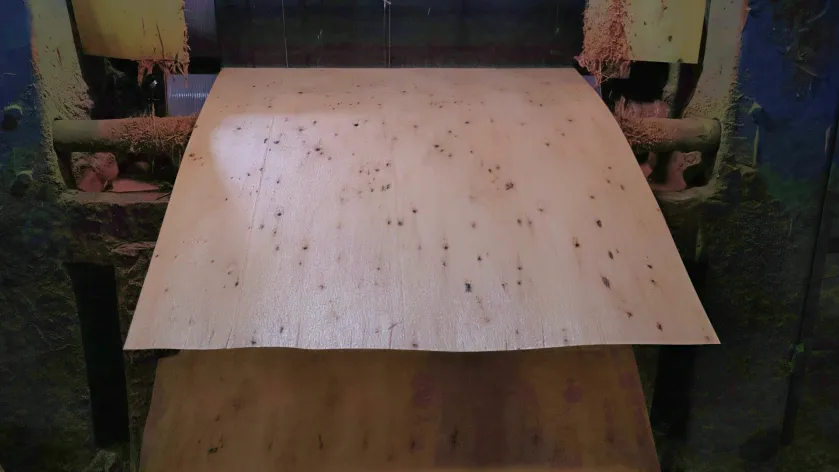
When sourcing film faced plywood for concrete formwork, buyers often compare thickness, core material, surface film, and price. However, the adhesive used between the veneer layers also plays an important role in plywood performance.
Phenolic resin glue (PF) is commonly selected for its durable, water-resistant bonding, while melamine-based glue offers a more economical option for applications where the required bonding performance can be achieved.
But does every construction project need phenolic-glued plywood?
Not necessarily. The right adhesive depends on the project's performance requirements, expected use, site conditions, and overall cost.
1. Phenolic vs. Melamine Glue: What Are the Main Differences?
Phenolic resin glue and melamine-based glue are both used to bond wood veneers during plywood production.
For construction formwork buyers, the main differences concern bonding durability, moisture resistance, and cost.
Comparison | Phenolic Resin Glue (PF) | Melamine-Based Glue |
Main advantage | Durable, water-resistant bonding | Economical adhesive configurations |
Water resistance | Commonly selected for demanding moisture exposure | Depends on formulation and bonding requirements |
Bonding durability | Well suited to demanding applications | Depends on the specified product configuration |
Reuse potential | Can support repeated use through durable bonding | Can meet appropriate reuse requirements |
Formaldehyde emissions | Properly manufactured PF-bonded plywood can achieve low emissions | Depends on formulation and finished-panel testing |
Production cost | Generally higher in Senpiao's current configurations | Generally lower in Senpiao's current configurations |
Purchasing priority | Higher bonding-performance requirements | Cost and performance balance |
The choice should be based on what the finished plywood needs to achieve, rather than assuming one adhesive is suitable for every project.
2. Which Glue Has Better Water Resistance?
Water resistance is one of the main reasons buyers choose phenolic resin glue.
During construction, formwork plywood may be exposed to wet concrete, rain, cleaning water, and moisture during storage.
If the adhesive bond deteriorates, the veneer layers may begin to separate, reducing the panel's usable life.
Phenolic resin adhesives are widely used for demanding water-resistant bonding applications. When properly manufactured, they can provide durable bonds under challenging moisture conditions.
Melamine-based adhesives can also provide moisture-resistant bonding, but their performance depends on the specific formulation and the finished plywood's bonding classification.
For projects requiring demanding water-resistant bonding, phenolic glue is often the preferred choice.
For applications with less demanding bonding requirements, a suitable melamine-based configuration may offer a more economical solution.
Buyers should confirm the required bonding performance instead of relying only on general descriptions such as “waterproof plywood.”
3. Does Phenolic Glue Make Film Faced Plywood More Durable?
Phenolic glue can contribute to longer-lasting plywood by helping maintain durable bonds between the veneer layers.
During use, concrete formwork panels experience moisture exposure, pressure, handling, stripping, and cleaning.
When bonding durability is insufficient, veneer separation can occur even if the plywood's surface film remains in reasonable condition.
PF glue is valued for its durable bonding performance, particularly in applications involving demanding moisture conditions.
This can help improve the plywood's potential for repeated use.
However, the overall durability of film faced plywood also depends on:
▪
Veneer and core quality
▪
Surface film performance
▪
Edge sealing
▪
Manufacturing consistency
▪
Site handling and maintenance
▪
Phenolic glue can improve bonding durability, but the complete plywood construction determines how well the panel performs in actual use.
4. Does Phenolic Glue Have Lower Formaldehyde Emissions?
Formaldehyde emissions are another consideration when selecting plywood adhesives.
Properly formulated and cured phenolic resin adhesives are commonly associated with low formaldehyde emissions in finished plywood.
This can be an advantage for buyers who require durable bonding together with controlled formaldehyde emissions.
Melamine-based adhesive systems can also be manufactured to meet specified emission requirements, depending on their formulation and production conditions.
The actual emission classification must be determined from the finished plywood rather than the adhesive name alone.
For example, Senpiao's JAS-certified 12mm concrete formwork plywood uses phenolic resin glue and has an F☆☆☆ formaldehyde emission classification under its certified specification.
This is a documented example of a PF-bonded plywood product with a defined emission classification.
5. Why Is Phenolic Glue More Expensive?
In Senpiao's current production configurations, phenolic resin glue generally has a higher cost than the melamine-based adhesive alternatives offered for certain orders.
This difference contributes to the price of the finished plywood.
For example, two 18mm film faced plywood panels may have the same nominal thickness and similar surface appearance but use different adhesive systems.
A PF-bonded configuration may cost more because of its adhesive materials and associated product requirements.
However, a higher price does not automatically make it the better choice for every buyer.
For projects requiring demanding bonding durability, the additional cost may be justified.
For projects with moderate performance requirements, a melamine-based configuration may provide sufficient performance at a lower purchasing cost.
The important question is whether the project actually requires the additional bonding performance.
6. Is Phenolic Glue Worth the Extra Cost for Every Construction Project?
Not every construction project requires plywood to be reused many times.
Some contractors reuse formwork panels repeatedly on the same construction site. Others use them for a limited number of concrete pours before the project is completed.
Even when a plywood panel remains in usable condition, transporting it to another site may not always be economical.
Film faced plywood can be heavy and difficult to handle. Removing, loading, transporting, unloading, and storing used panels all involve additional labor and costs.
Panels may also suffer damage during stripping and transportation.
As a result, the potential for more reuse cycles does not necessarily translate into lower overall project costs.
When PF may be worth the higher price
Phenolic glue may be the better investment when the project requires demanding water-resistant bonding, durable panel construction, or repeated use under challenging conditions.
In these situations, the additional bonding durability can provide practical value.
When melamine-based glue may be sufficient
For projects with limited reuse requirements, a suitable melamine-based configuration may offer better purchasing value, provided it meets the required bonding performance.
There may be little economic benefit in paying for a higher-performance adhesive if the additional durability will not be used.
What should buyers consider?
Rather than focusing only on the maximum possible number of reuse cycles, buyers should consider:
▪
The expected number of uses within the project
▪
The moisture exposure and bonding requirements
▪
Whether panels will be reused on the same site
▪
The labor and transportation costs of moving used plywood
▪
The purchase price of each adhesive configuration
▪
The best-value plywood is not always the panel with the highest potential reuse count. It is the panel that meets the project's requirements at a reasonable overall cost.
7. How Can Buyers Evaluate Plywood Bonding Quality?
Adhesive type is an important specification, but the performance of the finished plywood is what matters on site.
At Senpiao's own factory, laboratory testing is part of the quality evaluation process.
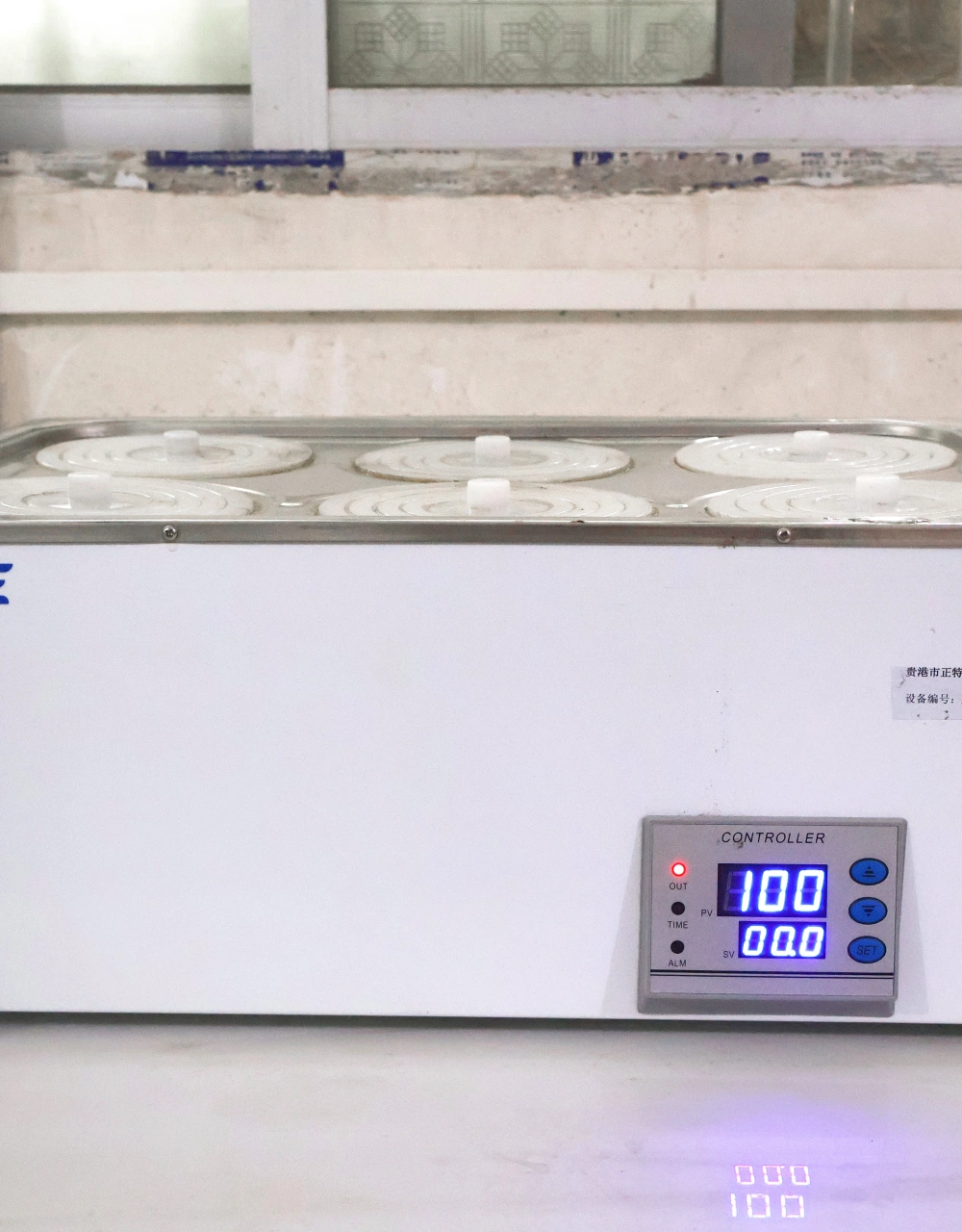
Boiling-Water Testing
Boiling-water treatment is used to evaluate plywood bonding behavior under specified test conditions.
It helps assess how the bonded veneer layers perform after exposure to hot-water treatment.
Different standards use different procedures and acceptance requirements, so advertised boiling times should not be compared without understanding the applicable test method.
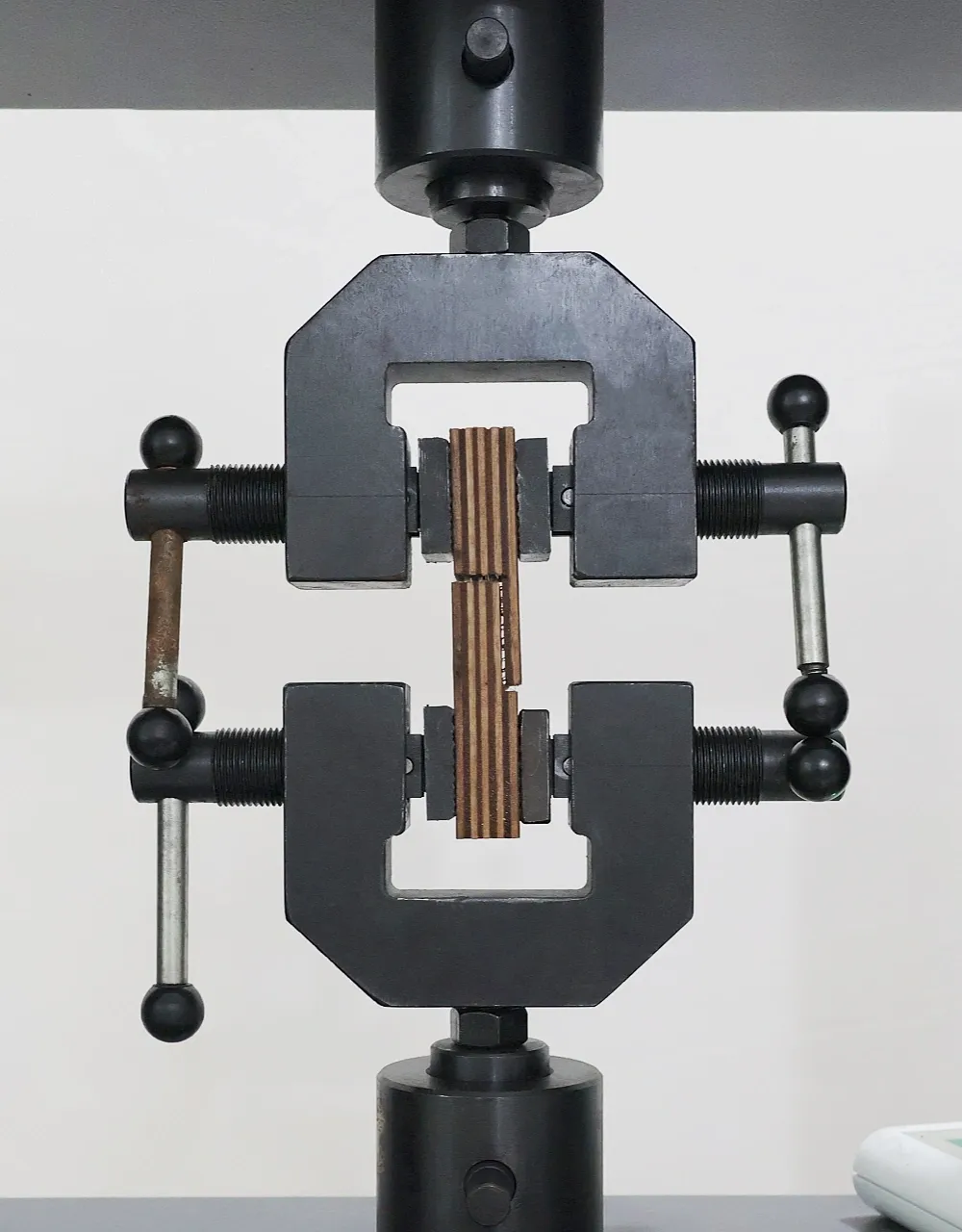
Bonding Strength Testing
Mechanical testing helps evaluate the bonding performance of plywood specimens.
This is relevant when comparing adhesive configurations or confirming whether the finished plywood meets a specified bonding requirement.
Relevant quality testing information can be provided upon request, depending on the product specifications.
Conclusion: Choose the Adhesive That Fits the Project
Phenolic resin glue offers important advantages in water-resistant bonding and durability, making it a strong option for demanding construction formwork applications.
Melamine-based glue provides an alternative for projects where the required bonding performance can be achieved at a more economical cost.
However, higher durability does not always mean lower overall project costs. The actual number of uses, site conditions, handling requirements, and transportation costs all influence the purchasing decision.
For plywood importers and construction contractors, the right adhesive is the one that meets the project's performance requirements without unnecessary cost.
Senpiao Plywood manufactures construction plywood at its own factory and offers different adhesive configurations according to customer requirements.
For product specifications or quotations, contact our team.
Website: https://www.f4starplywood.com
For immediate plywood inquiries, please contact us.